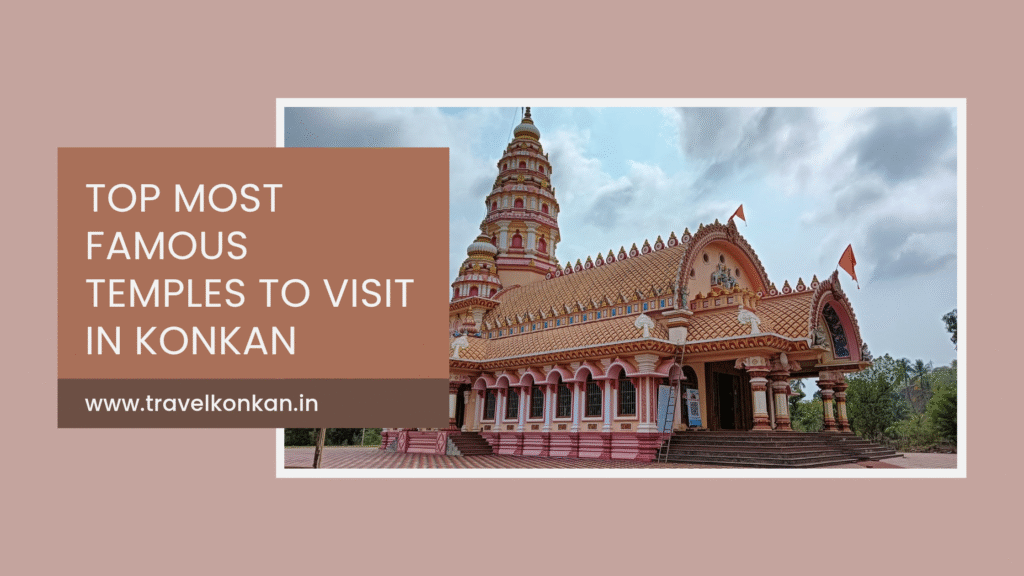
Nestled amidst the exotic wilderness of Dapoli, Keshavraj Temple stands as a stunning testament to the rich cultural heritage of India. This mystical temple is located in Asud, a quaint village in the Konkan region of Maharashtra. From its intriguing origin story to its breathtaking surroundings, Keshavraj Temple promises a spiritual experience like no other. As you step inside the temple, the architectural brilliance and intricate detail are bound to render you speechless. The temple’s design showcases exquisite carvings, elaborate sculptures and beautifully crafted pillars that narrate tales of ancient mythology. At its centre lies the idol of Keshavraj, a divine avatar of Lord Vishnu, attracting devotees from across the world.
Approximately 7 km away from Dapoli is a village named Aasud. This village is blessed with abundance of natural beauty. If we set off on the Dapoli – Harne roadway, after 6 km we will come across a beautiful place called Aasud Baug. Turn right from here and after a 15 – 20 mins walk, you will come across this extremely beautiful place called Keshavraj Mandir (Vishnu Temple). To reach the temple, visitors must take a short trek through a lush forest, crossing a small stream and walking along a path lined with tall coconut trees, betel nut trees, and other native flora. The trek to the temple is not just a journey of spirituality but also an immersion in nature. The cool, shaded trail provides a peaceful escape from the hustle and bustle of daily life.
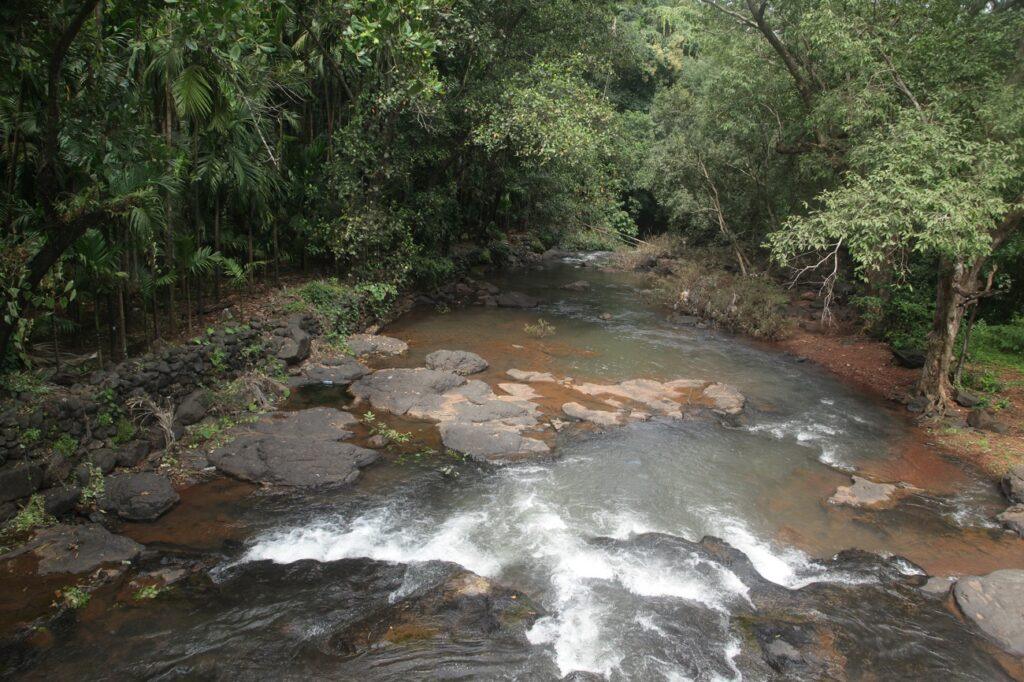
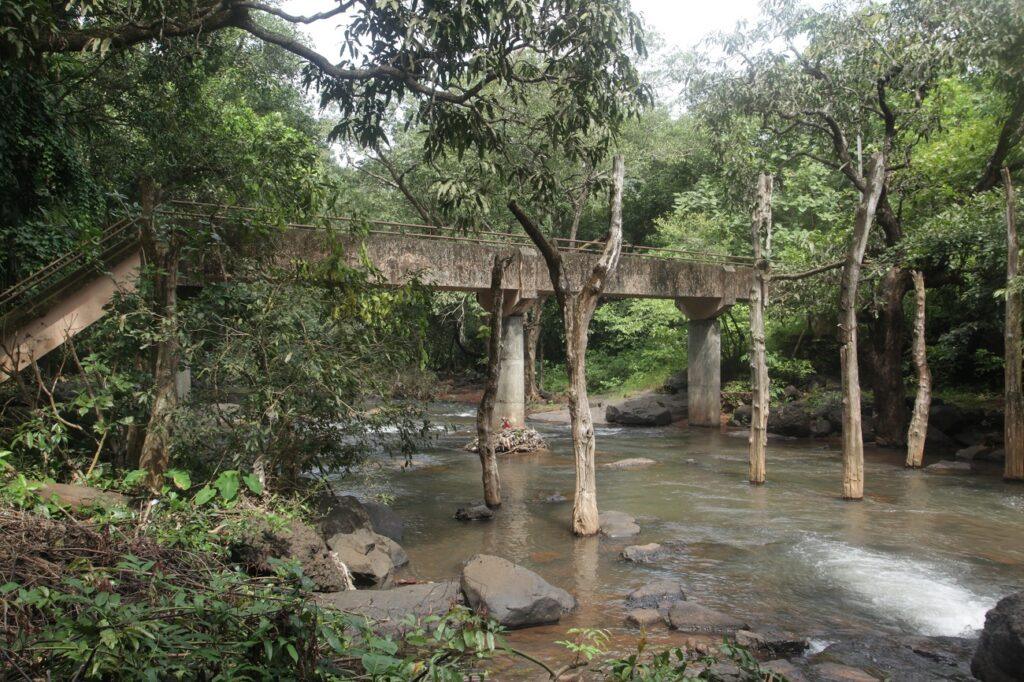
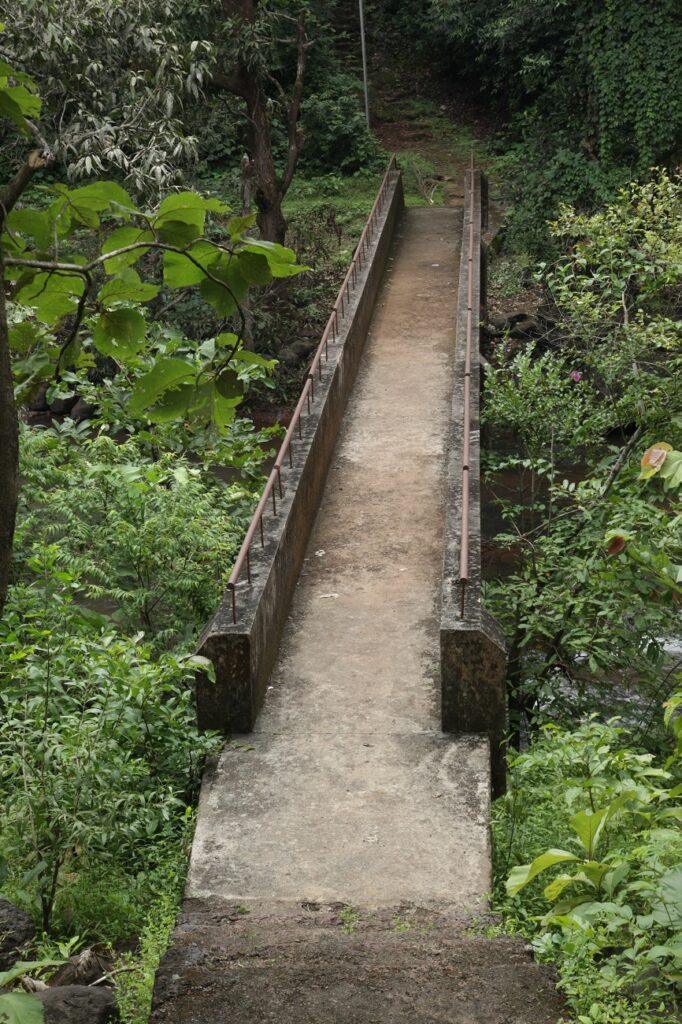
While walking towards the temple, you will come across a small bridge. This is the very bridge that gained immortality by being mentioned in one of the most famous Marathi novels, ‘Garambicha Baapu’ by Hon. N. Pendse. Across the river bridge, lies a small road that ascends to the Keshavraj Temple. You will find the walk along this narrow road unforgettable. A walk along this road that goes through a thick growth of Coconut trees, Betel nut trees, Mangoes, Cashew nuts, etc., becomes even more fascinating with sweet songs of beautiful birds, which is bound to give ones heart the peaceful retreat it deserves. Surprisingly, you won’t feel tired at all, even if the road is ascending. It is nothing but a warm pleasant feeling that leaves the heart peaceful.
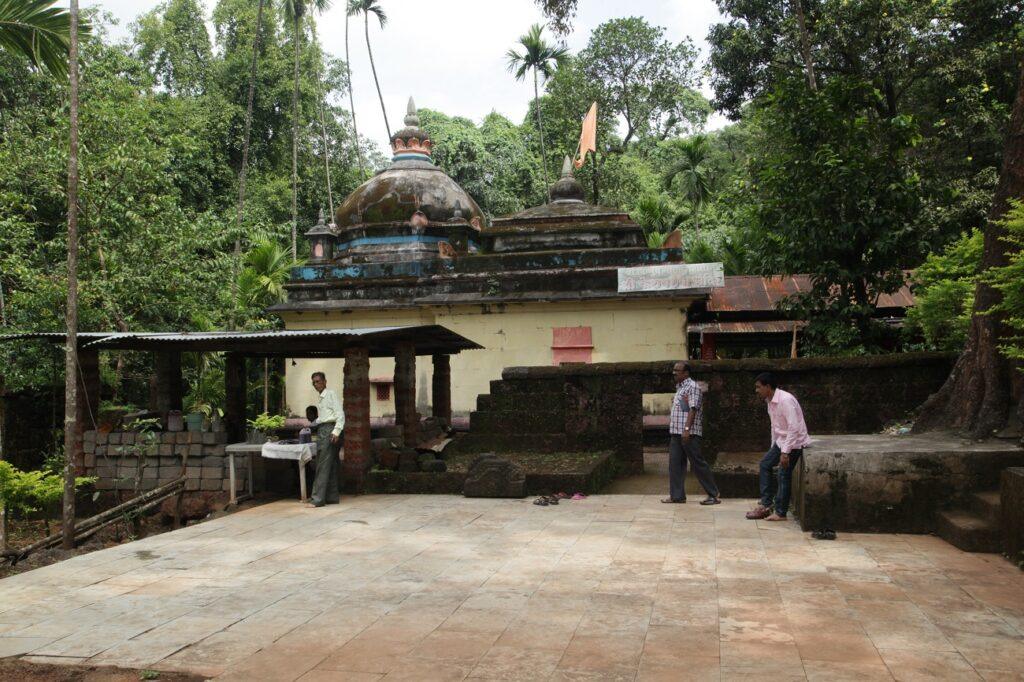
The architecture of Keshavraj Temple reflects the typical style of the Konkan region, characterized by simple yet elegant designs that blend seamlessly with the natural surroundings. Situated amidst dense trees, this temple is atleast thousand years old. It is a stone structure and is beautiful as it is.
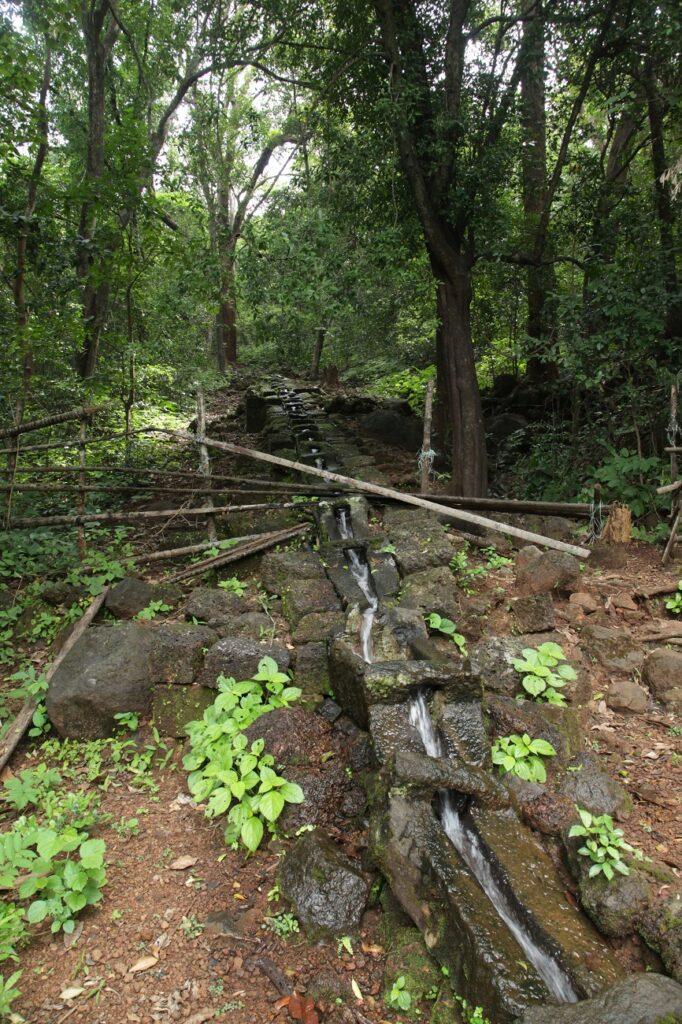
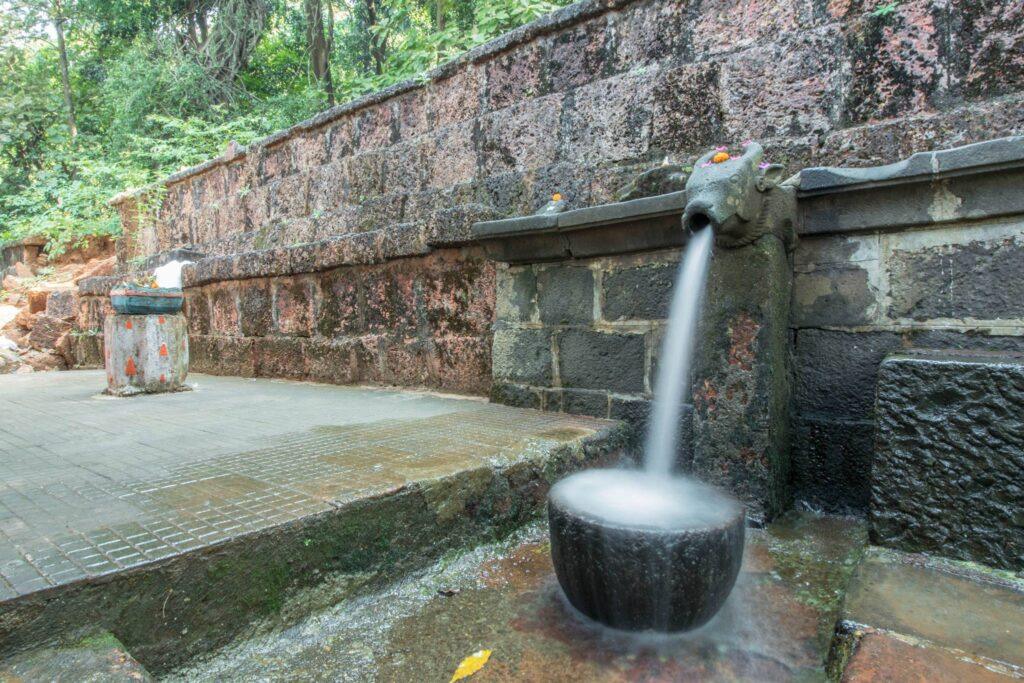
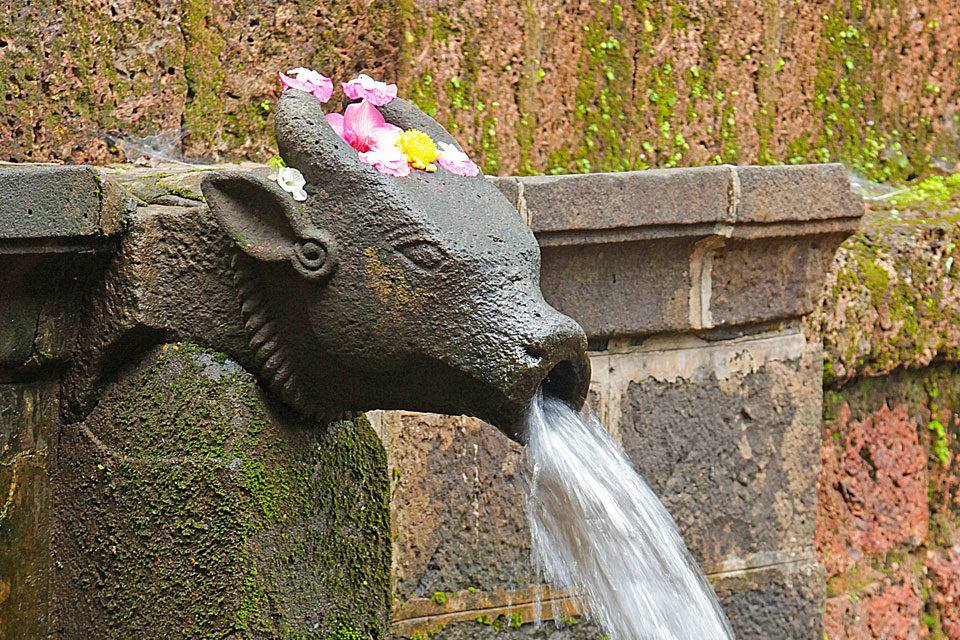
One of the temple’s unique features is that it has a small pool in its yard, which has a stone fountain head in the shape of a cow’s head (called “Gomukh”). The fresh water spring which is believed to be sacred flows through the Gomukh structure, all round the year. This water comes from the mountains through a natural stream. This stream has been brought to the temple through a beautiful stone corrugated structure. This water is considered holy by devotees and is often used for rituals.
At the entrance of the temple, you will see a statue of Lord Ganesh. On the left side of the entrance, you will see a statue of Lord Hanuman while on the right side; there is a statue of Garuda (Lord Vishnu’s ride). The statue of Lord Vishnu, to whom the temple is dedicated to, is very beautiful. The statue has 4 arms, each holding a Shankha (Conch), Chakra, Gada (Mace) & Padma (Lotus flower).This temple is situated away from human civilization. It is quite unusual, as normally, temples dedicated to Lord Vishnu, are built amidst human settlements, while temples of Lord Shiva are built in secluded places away from human settlements. Hence, this particular Vishnu temple is an exception.
What makes the history of Keshavraj Temple all the more remarkable is the legend that it was constructed overnight. As the story goes, the Pandavas, accompanied by an army of celestial beings, worked tirelessly under the cover of darkness. They laid the foundation, sculpted intricate carvings, and raised the temple’s grand structure, all within the span of a single night. However, other sources say that it was established during the reign of the Peshwas. Regardless of its origin, this remarkable feat has left historians and architects astounded throughout the ages.
Regular rituals and pujas are performed at the temple, especially on Thursdays, which are considered auspicious for worshipping Lord Vishnu. Special ceremonies are also held during major Hindu festivals, attracting a large number of devotees. The celebration of festivals starts at this temple from the first Ekadashi (11th day of the first lunar phase) of the month of Kartik (Hindu calendar month) and continue for 5 more days. On the day of the full moon, they make Prasad (a devotional offering for God, typically consisting of food that is later shared among devotees). The festival resumes from the 2nd Ekasdashi and 3 days later they make Prasad again. This deity is the principle God of many clans like Devghar, Dikshit, Dhamdhere, Datar, Dandekar, Agarkar, Gangal, etc.
The temple sees a surge in visitors during festivals like Ram Navami, Diwali, and Janmashtami, when special prayers and celebrations are organized. The temple premises are decorated with flowers and lights, creating a festive atmosphere. Keshavraj Temple is not only a place of worship but also a symbol of the region’s rich cultural and spiritual heritage. Its serene environment, coupled with its religious significance, makes it a must-visit destination for both pilgrims and tourists in the Konkan region. The best time to visit this temple is during festive occasions, when you can witness the vibrant celebrations that bring the temple to life.
This temple and its surroundings are special for one more reason. These are the very surroundings that inspired the great Marathi writer Hon. N.Pendse to write his famous work ‘Garambicha bapu’. He has written about the beauty of this place in this novel. Later a feature film was made based on this novel. Right from the bridge to the dense garden of coconut and betel nut trees were shown in this film. Any tourist, who visits Dapoli, always makes a point to visit this temple.