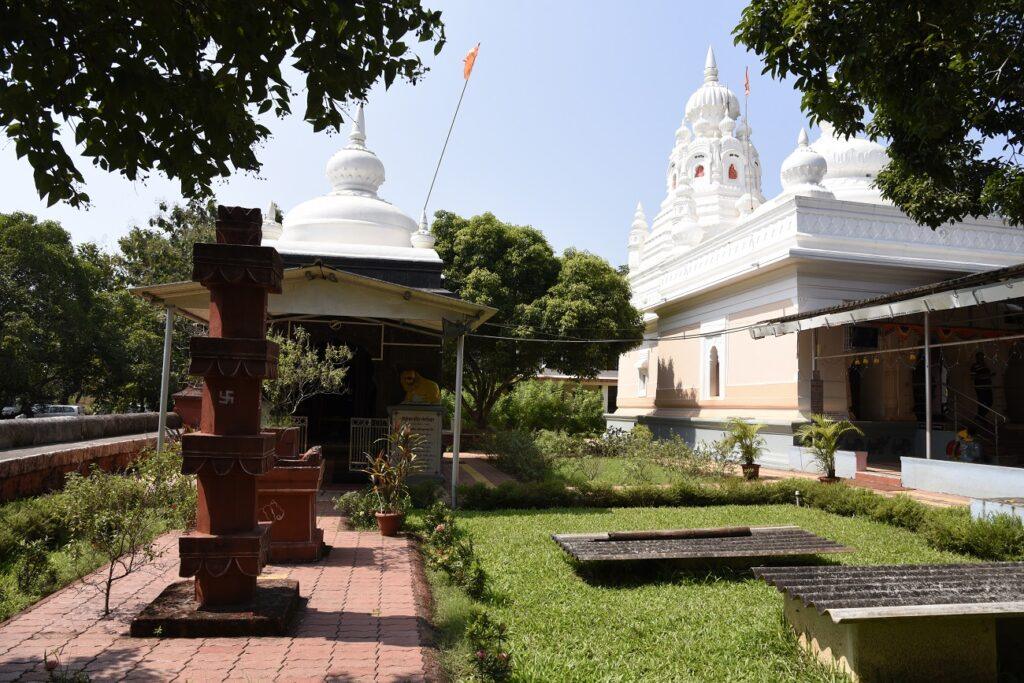
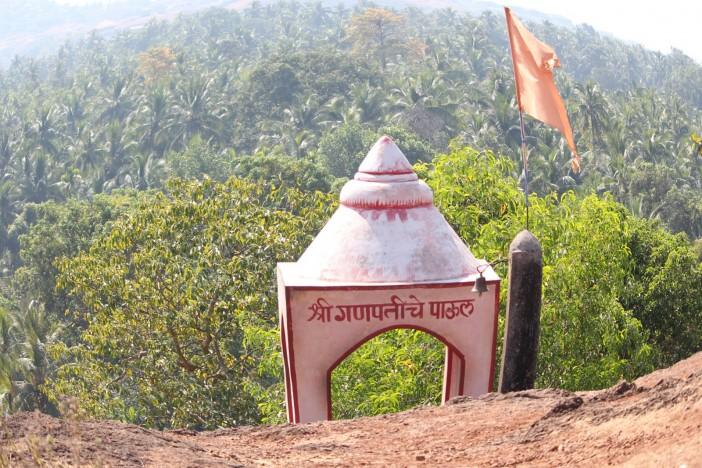
Anjarle’s heart beats to the rhythm of the Kadyavarcha Ganpati Temple, a revered shrine dedicated to Lord Ganesha. According to local legend, the temple dates back to the 12th century, built by the Shilahara dynasty. The unique black stone idol of Lord Ganesha with a right-handed trunk, unlike the more common left-handed ones, adds to the temple’s mystique. Perched atop a hill overlooking the serene Anjarle beach and the majestic Suvarnadurg Fort, the temple offers breathtaking panoramic views, making it a pilgrimage site and a popular tourist destination.
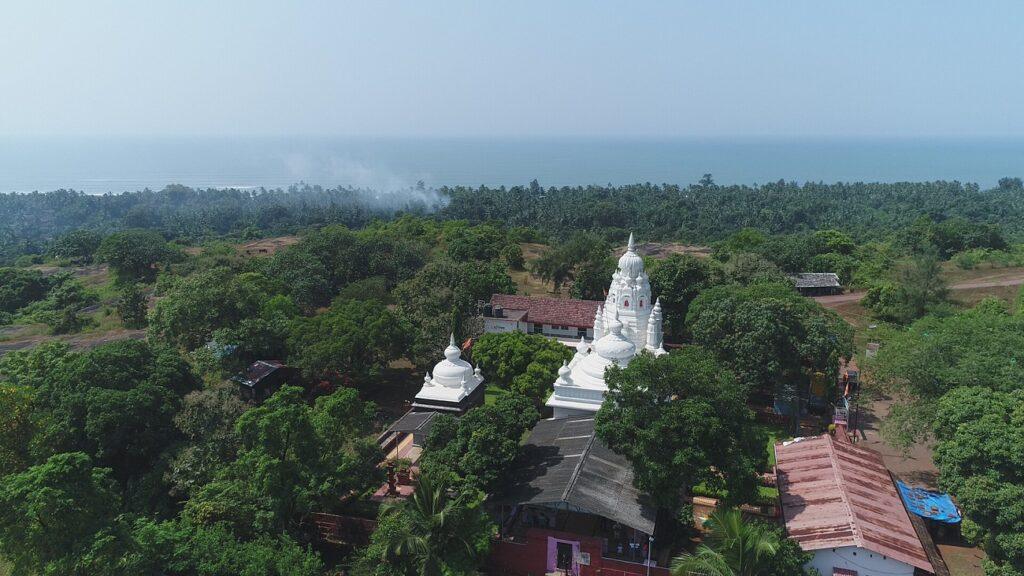
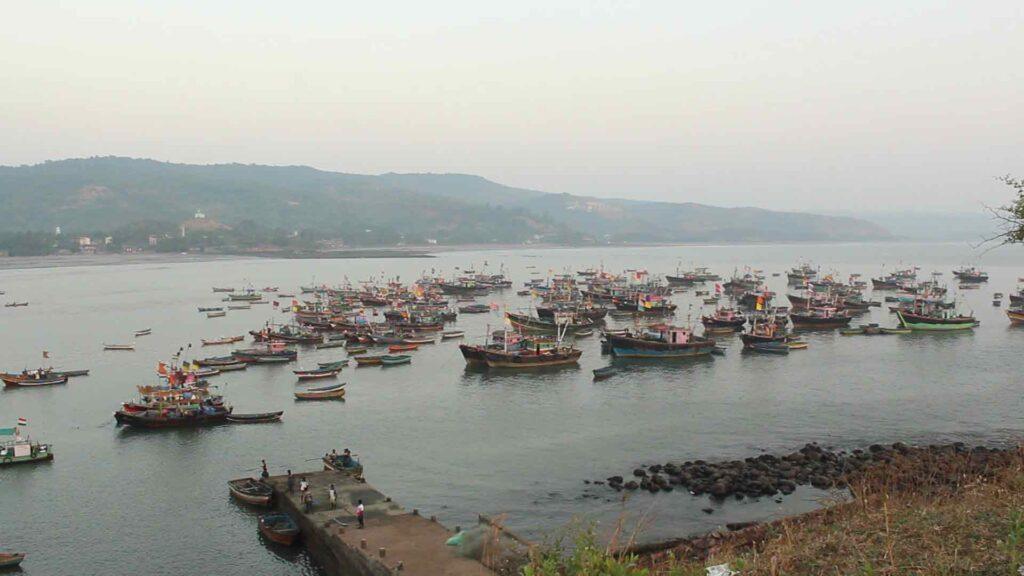
Dapoli taluka in Ratanagiri district is home to a historical fort named Suvarnadurg which is located at the mouth of the river Jog. Near the fort stands Anjarle seaport which is named after the scenic village it is in, which is 20Kms away from Dapoli. In the same village, stands the famous temple named Kadyavarcha Ganpati. This temple is one of the most famous tourist attractions in Konkan. This place which once was extremely hard to reach is now easily accessible by a road which is adorned with natural diversity. Though climbing the hill is little tough with sharp turns, the scenic beauty of the sea & river gives an exotic experience.
There are many rumors about the origins of this temple, but unfortunately there is no evidence to shed a light on it. If we were to consider the information received from many fables, then the temple’s creation traces back to the 12th century. The administration of this temple has been with the ‘Nisture’ family from the year 1630.
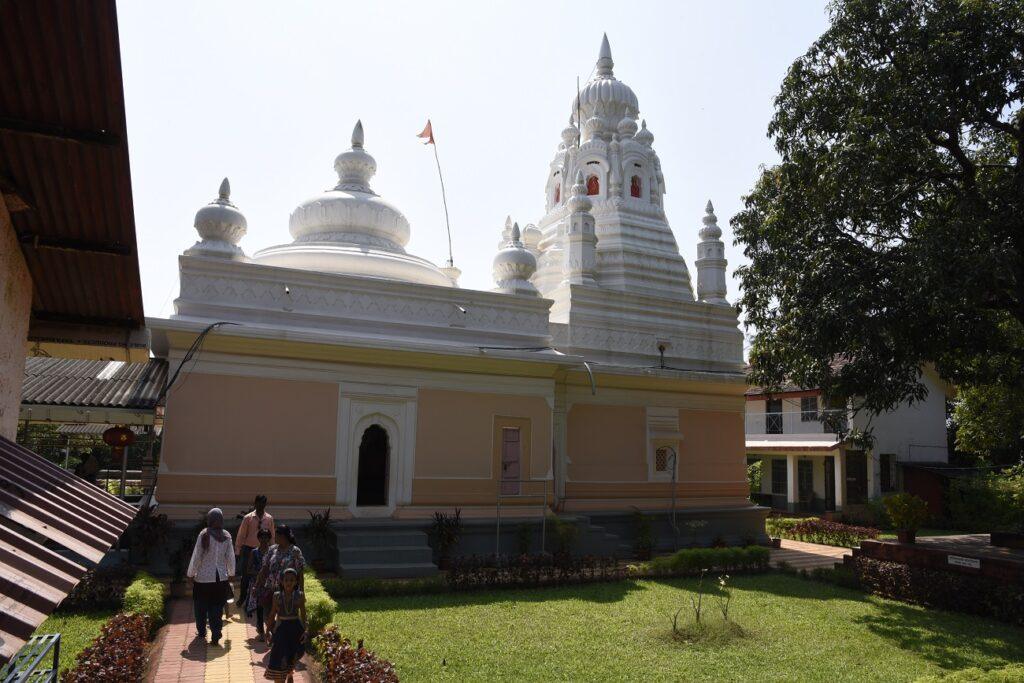
The old structure of this temple was made completely out of wood. As per the fables, this temple was at the seashore in the ancient days. The same sea shore was home to two other temples of Ajayrayleshwar & Siddhivinayak. You can still see the remains of these two temples when there is a low tide and the water level decreases. Considering the damage caused by these natural factors (high/low tide) the temple was repositioned at the nearest hill top; hence the name Kadyavarcha Ganpati. This was probably done between 1768 and 1780. When the temple was repositioned, it was made with laterite stone. The temple has a 3-tier structure and to reach to the temple one has to climb a good 200 stairs. To suit the modern needs, a way for four wheelers too has been made.
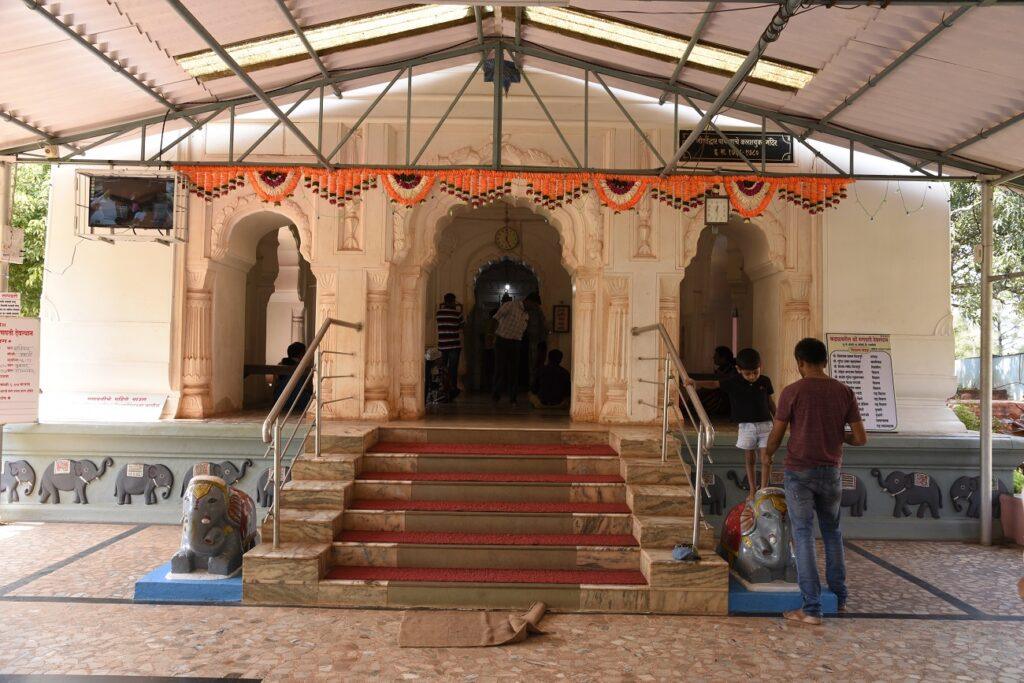
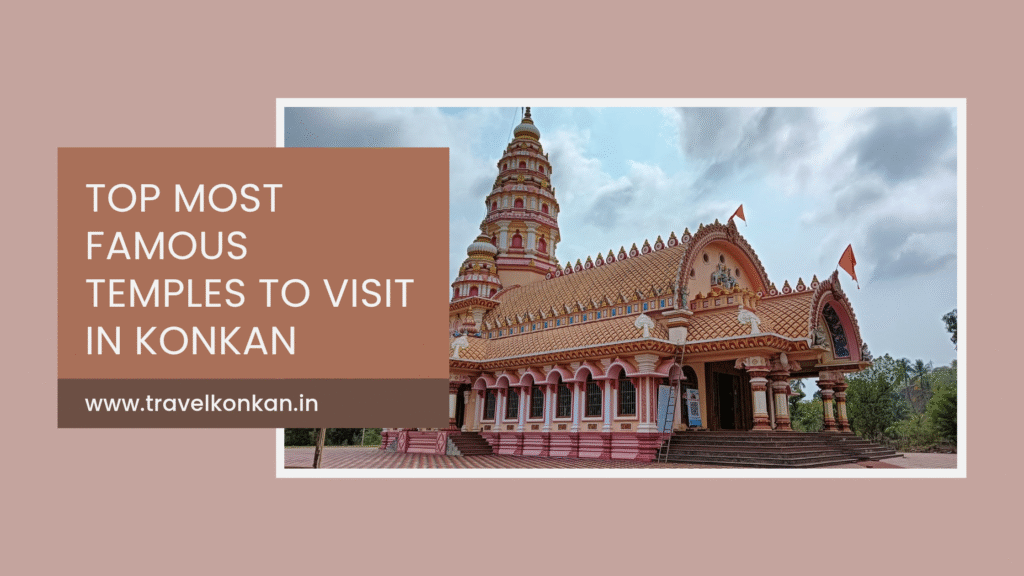
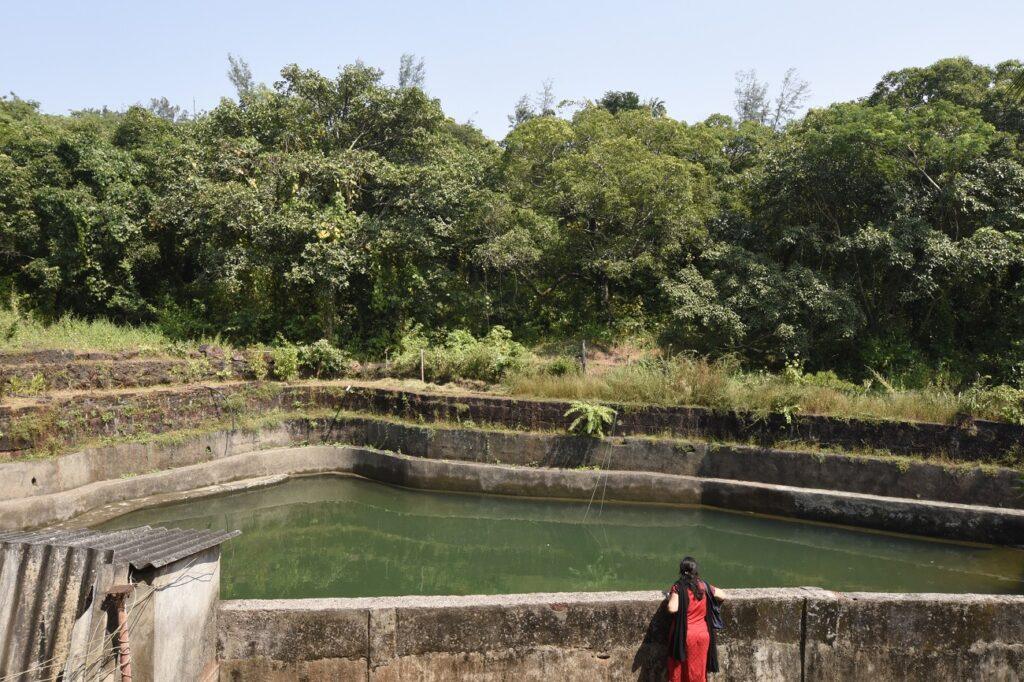
While reviving the temple, its black stone was plastered which made it appear white. The temple’s yard is extensive with Lord Ganpati’s statue at its center and Lord Shiva’s statue besides it. Adding beauty to the temple is a small but serene pond right opposite to the temple, which has an old Bakul tree at its banks. In 1980 the temple celebrated its 200th anniversary. This 65-foot-long temple has a surface area of 50×40 foot. Even though the temple’s architecture style is mixed in nature, after careful observation, one would see that it is majorly influenced by medieval and modern architecture styles. The temple has 16 smaller Kalash apart from the main Kalash (top pointed structure) over the main hall. The main Kalash has the Ashtavinayaks (eight holy forms of Ganpati) carved on it. The temple’s complete structure which consists of a main hall, an assembly hall and a yard, has two doors. One door is of 60 foot, while the other is 40 foot large. The assembly hall of the temple has 8 arches and a dome structured roof. The centers of these domes are adorned by a beautiful lotus flower structure. The idol of Lord Ganpati in this temple leaves an impression on anyone who sets eyes on it. It has a trunk folded to the right hand while the lord can be seen sitting on a stone throne of almost 5 feet. This idol being made from black stone is adorned by small idols of his wives Riddhi and Siddhi, on its left and right side. As told by the old people, this idol is made by the Pathavats (a local clan of sculptors). Maghi Ganesh Utsav is the most important festivals celebrated at this temple as it marks the birth of Lord Ganpati. This beautiful temple right opposite to the famous Suvarnadurg fort is spot for many beautiful sunsets, where one can procrastinate and understand the essence of life.
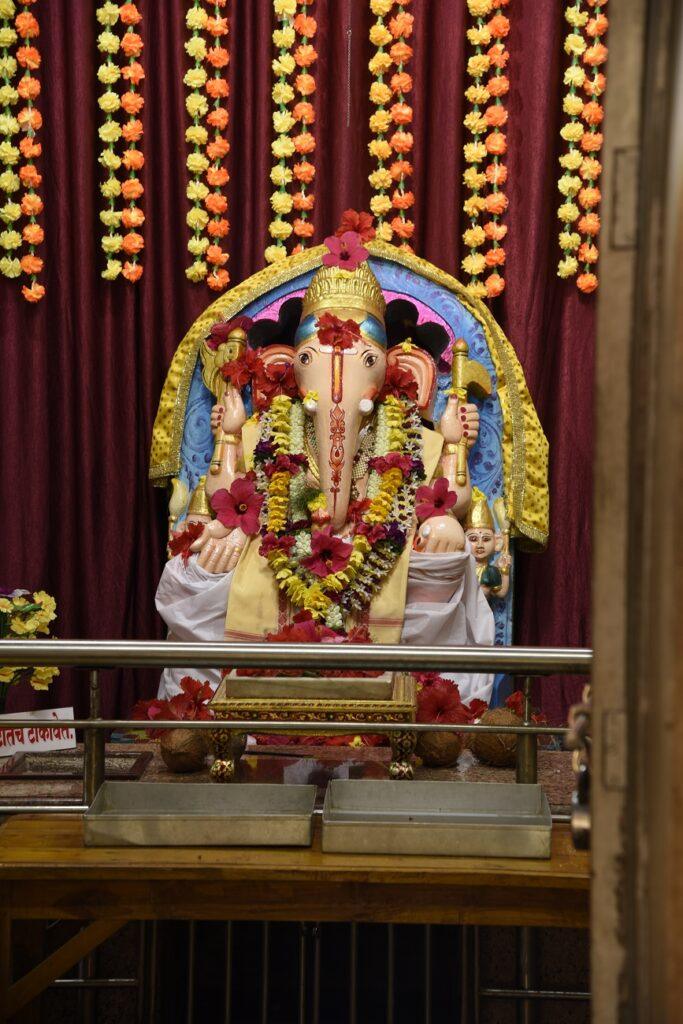
Ganesh Chaturthi & Maaghi Ganesh Jayanti are the two main fstivals which are celebrated in the village with great enthusiast & vigor. During these festivals traditional rituals, including morning and evening aartis, are performed daily. The idol of Lord Ganesha is adorned with beautiful flowers and ornaments, and the temple is decorated with lights and rangoli. Cultural programs, including traditional music and dance performances, are organized as part of the celebrations. Devotees participate in bhajans (devotional songs) and kirtans (narrative singing), creating a spiritually charged atmosphere. The local community actively participates in organizing the festivities, including processions and prasad (sacred food) distribution. Traditional games, performances by local artists, and other entertainment activities are organized as part of the fair. It is a time of joy and community bonding.