
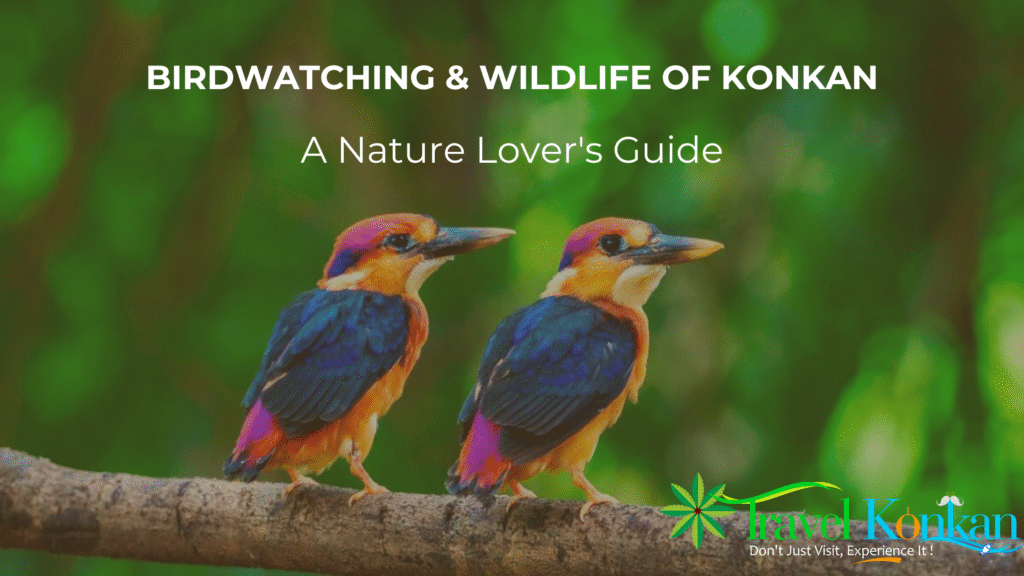
The tranquil shores, dense forests, mangroves, estuaries, and hills of the Konkan region form a spectacular mosaic of habitats — making it a biodiversity hotspot along India’s western coast. From sea-facing mangroves to forested slopes of the Western Ghats, Konkan supports a rich diversity of life. In this blog post, we explore why Konkan is a paradise for birdwatchers and wildlife enthusiasts, highlight top species you might spot, suggest best practices, and point you to must-visit zones.
Why Konkan Is a Biodiversity Hotspot
The Konkan region — a narrow strip between the Arabian Sea and the Western Ghats — benefits from a remarkable diversity of ecosystems: mangroves, coastal wetlands, estuaries, rivers, evergreen & moist deciduous forests, casuarina plantations, agricultural land, and coastal plateaus.
Conservation studies have documented that such habitat heterogeneity supports a large number of species across taxa. In one survey across seven habitat types (forest land, mangrove forest, grasslands, plantations, wetlands, and coastal zones), researchers recorded 114 bird species from 51 families — totalling 9,348 individual bird encounters.
Moreover, the region is part of the wider Sahyadri–Konkan Corridor — which connects forested areas of the Western Ghats to coastal mosaics. This corridor is critical for movement of large mammals such as tigers, leopards, sloth bears, gaur and dholes.
Thus, Konkan not only thrives as a birdwatching hotspot — but also supports a broader wildlife community, from reptiles and amphibians to marine mammals, mammals, and flora.
Avifauna of Konkan — Species Highlights
Konkan’s birdlife is especially rich due to the combination of coastal, wetland, forest and agricultural habitats. Among the many bird species recorded here are:
Wetland, Shoreline & Coastal Birds
- Herons and Egrets: Grey Heron, Little Heron, Indian Pond Heron, Cattle Egret, Little Egret, Night Herons etc.
- Storks, Ibis & Spoonbills: Painted Stork, Asian Openbill, Glossy Ibis, Eurasian Spoonbill among others.
- Ducks and Waterfowl: Bar-Headed Goose, Lesser Whistling Duck, Ruddy Shelduck, Mallard, Common Teal, Pochards, Cotton Pygmy-Goose, Comb Duck, and more.
- Waders and Shorebirds: Various shorebirds frequent coastal wetlands, estuaries and mudflats — especially during migratory seasons.
Forests, Woodland & Western Ghats Birds
- Hornbills: Species such as Malabar Pied Hornbill, Indian Grey Hornbill, and Malabar Grey Hornbill are regularly reported in Konkan’s forested hills.
- Junglefowl: Grey Junglefowl — wild ancestors of the domestic chicken — roam in forest undergrowth and forest edges.
- Small forest birds & passerines: Kingfishers, bee-eaters, cuckoos, parakeets, flycatchers, orioles, and many insectivorous and frugivorous birds that brighten forest edges and gardens.
In total, research documented over 114 species of birds across different habitats in Konkan, with certain seasons showing higher bird-richness and diversity.
Beyond Birds — Wildlife, Marine Life & Biodiversity
While birdwatching is a major draw, Konkan’s wildlife goes far beyond just birds.
- Mammals & Large Wildlife: Through the Sahyadri–Konkan Corridor pass animals such as leopards, sloth bears, gaur, dholes, and other wildlife — showing that the region supports healthy populations of large mammals when habitat connectivity is maintained.
- Marine & Coastal Fauna: The coastal and mangrove zones are home to rich marine biodiversity including fish, crustaceans, molluscs, and even marine mammals. Notably, Indian Ocean Humpback Dolphin (Sousa plumbea) has been recorded along the Maharashtra coast, including parts of Konkan — highlighting the significance of marine-coastal conservation here.
- Reptiles, Amphibians & Lesser-Seen Species: Forests and plateaus can harbour reptiles, amphibians, and endemic or lesser-known species — including fossorial creatures. For example, species like Indotyphlus maharashtraensis (a caecilian) have been described from Western Ghats regions of Maharashtra, indicating the cryptic biodiversity present in such landscapes.
This makes Konkan not only a hotspot for bird lovers, but a region of importance for overall wildlife conservation — from forest fauna to marine ecosystems.
Best Time & Places for Birdwatching in Konkan
✔️ Ideal Time: Post-Monsoon to Winter (October – March)
According to local birding guides and tour operators, post-monsoon (after the rains) through winter is the prime season for birdwatching, when migratory birds visit wetlands and coastal areas, and forest birds become more active.
Early mornings — roughly between 6:00 AM and 9:00 AM — tend to be the most rewarding time for sightings and photography.
📍 Where to Go: Habitats & Zones That Deliver
- Mangroves, Estuaries & Wetlands along the Coast: Great for spotting coastal waterfowl, shorebirds, waders, egrets, and storks. The coastal plains and wetlands offer contrasting habitats making for good diversity.
- Forest patches, Plateaus & Western Ghats Hills: Forested slopes and foothills towards the Western Ghats are ideal for hornbills, junglefowl, small forest birds, and reptiles. Areas connected through the Sahyadri–Konkan corridor often yield sightings of mammals, too.
- Mix of habitats (casuarina plantations, agricultural lands, home gardens, grasslands): Because of habitat interlinking in Konkan (forest–agriculture–settlement mosaics), even villages with gardens or paddy fields often host surprisingly rich bird life.
Conservation & Challenges — What Birdwatchers Should Know
While Konkan remains a hotspot, its biodiversity and ecological health face several pressures:
- Habitat Fragmentation & Land-use Change: The corridor linking Western Ghats forests to the coast is fragmented. Conversion of land for plantations, agriculture, or development threatens habitat connectivity — vital for species like big cats, sloth bears, gaur, and dholes.
- Need for Protected Areas & Conservation Action: Although there are declared sanctuaries and proposed conservation-reserves, a large part of Konkan is privately owned or under mixed land-use. Conservation biologists stress the need for informed landscape management to preserve biodiversity.
- Marine and Coastal Biodiversity Pressure: Coastal development, pollution, fishing practices and disturbance to mangroves and estuaries can impact marine mammals, fish, and coastal waterbirds. The recent studies documenting dolphins along the coast underline the need for marine conservation awareness.
As a birdwatcher or wildlife-traveller visiting Konkan, you can contribute positively — by following responsible wildlife-tourism practices: avoid disturbing nesting birds, maintain silence during forest walks, avoid littering, support local eco-friendly guides, and minimise disturbance to sensitive coastal or mangrove habitats.
Tips for Organising a Birdwatching Trip in Konkan
- Hire a Local Expert Guide or Join a Birding Tour: Local guides often know the best times and locations for sightings — especially for elusive species like hornbills or forest birds.
- Visit Multiple Habitats: Since birds and wildlife in Konkan use a variety of habitats (coastal wetlands, mangroves, forests, agricultural lands), covering a mix of zones increases your diversity of sightings — forest edges, coastal mudflats, estuaries, streams, plantations, and grasslands.
- Go Early Morning: As noted earlier, early hours (sunrise to 9 AM) are typically most productive.
- Travel in the Right Season: Post-monsoon through early summer tends to offer good bird activity and migratory species.
- Carry Field Gear: Binoculars, a camera (with zoom lens if possible), a field checklist or local bird-ID guide, and comfortable clothes (for forests, humidity, and coastal conditions) improve your chances of a rewarding trip.
A Sample Itinerary Idea
Here’s a simple 3-day birdwatching and nature-immersion itinerary in Konkan:
| Day | Plan / Habitats | Key Sights / Activities |
| Day 1 — Coastal Wetlands & Mangroves | Visit a coastal estuary or mangrove zone near the sea; tide-pools or mudflats at low tide | Waterfowl, storks, ibises, shorebirds, migratory species, tide-dependent marine life |
| Day 2 — Forest Hills / Ghats Foothills | Head inland toward forested hills or hillsides connected to Western Ghats | Hornbills, junglefowl, woodland birds, maybe reptiles or small mammals, forest ambience |
| Day 3 — Mixed Habitat: Rural, Plantation & Buffer Zone | Visit a village or plantation-edge area near forest/wetland interface | Birdlife in agro-ecosystems: parakeets, bee-eaters, small passerines; observe human-nature coexistence; local culture & eco-tourism |
Final Thoughts
The Konkan region remains one of India’s under-celebrated ecological treasures — a mosaic of sea and mountains, forests and wetlands, coast and hills. For birdwatchers, wildlife enthusiasts or eco-tourists, it offers a rare combination: coastal biodiversity, rich avifauna, forest species, and even mammals and marine life — all within reachable distance of coastal towns.
But with increasing developmental pressures and habitat fragmentation, the onus is also on visitors to travel responsibly, respect nature, and support conservation-minded local communities and guides.

